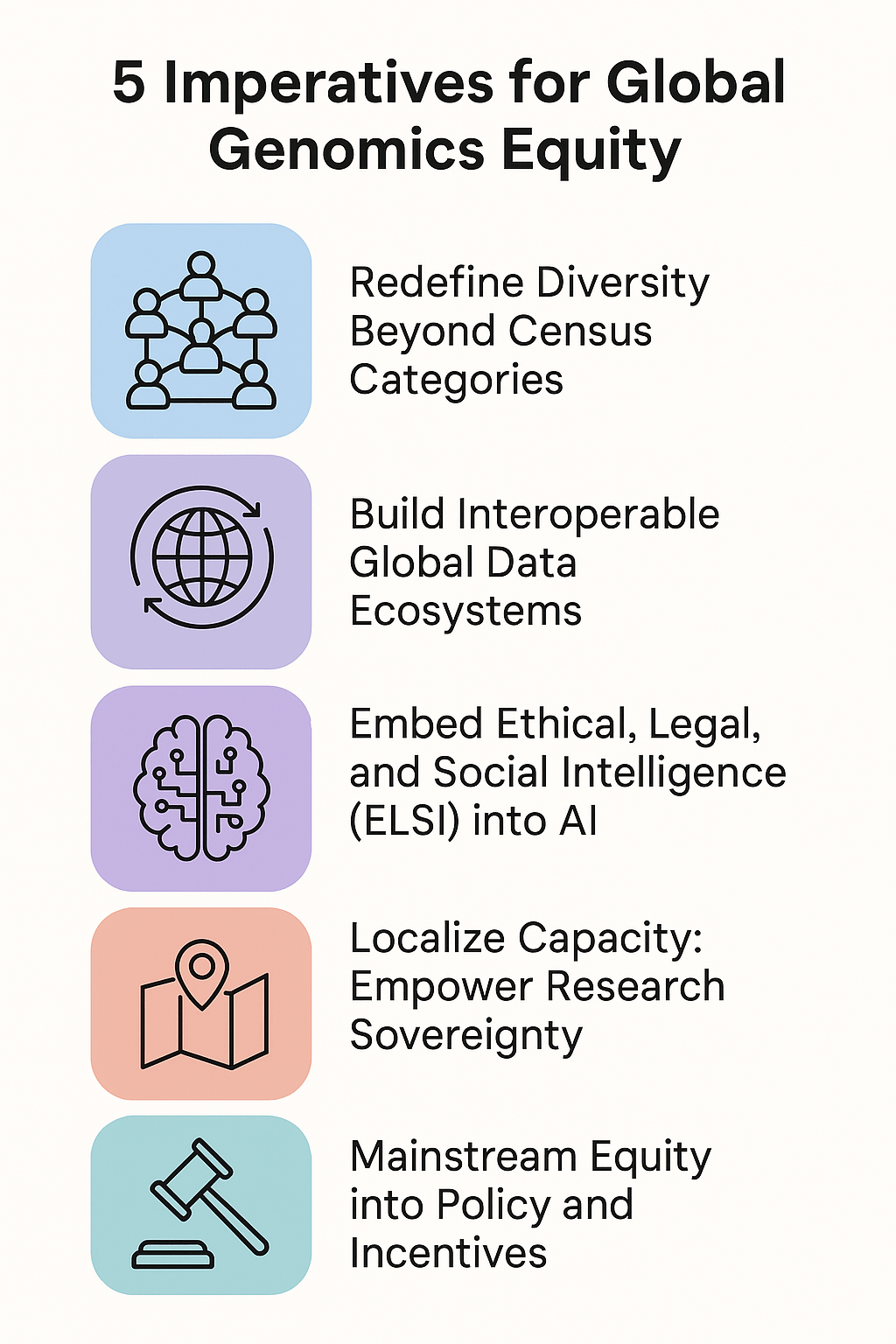
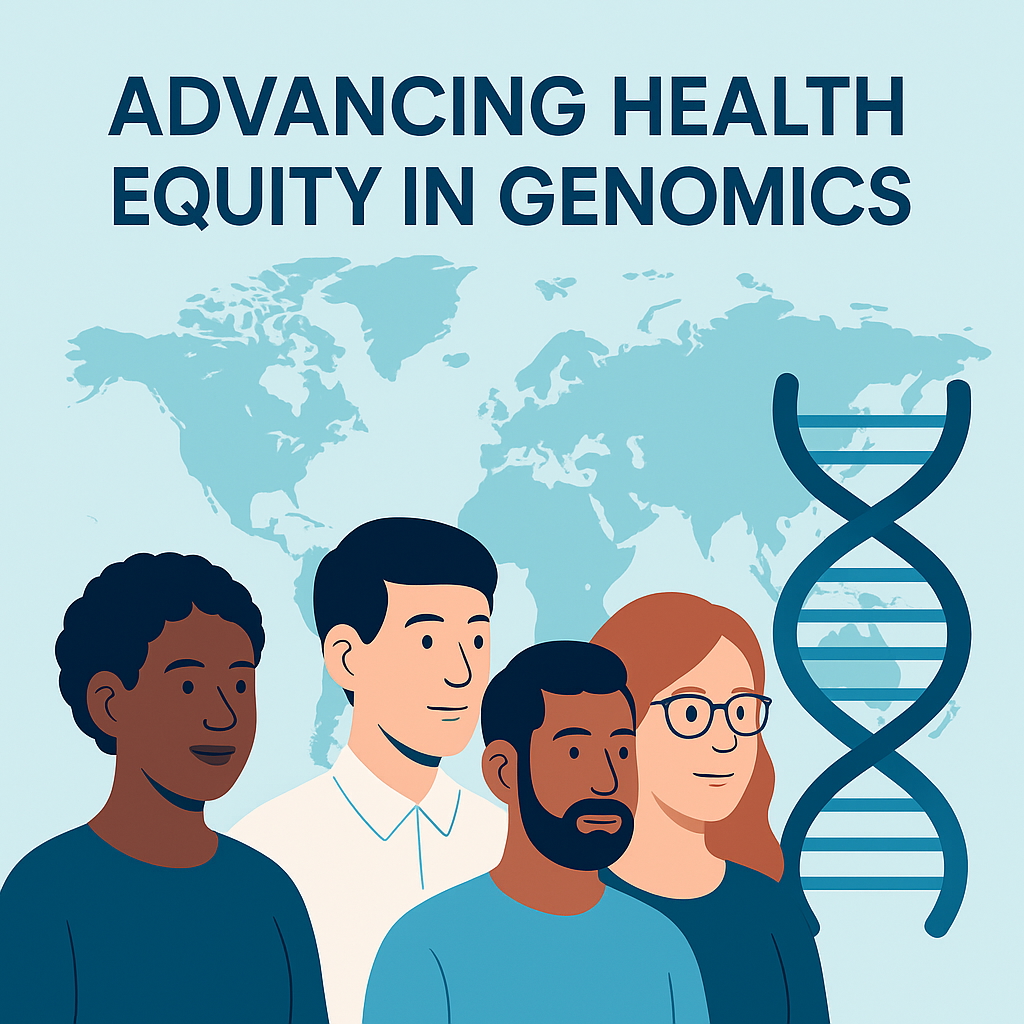
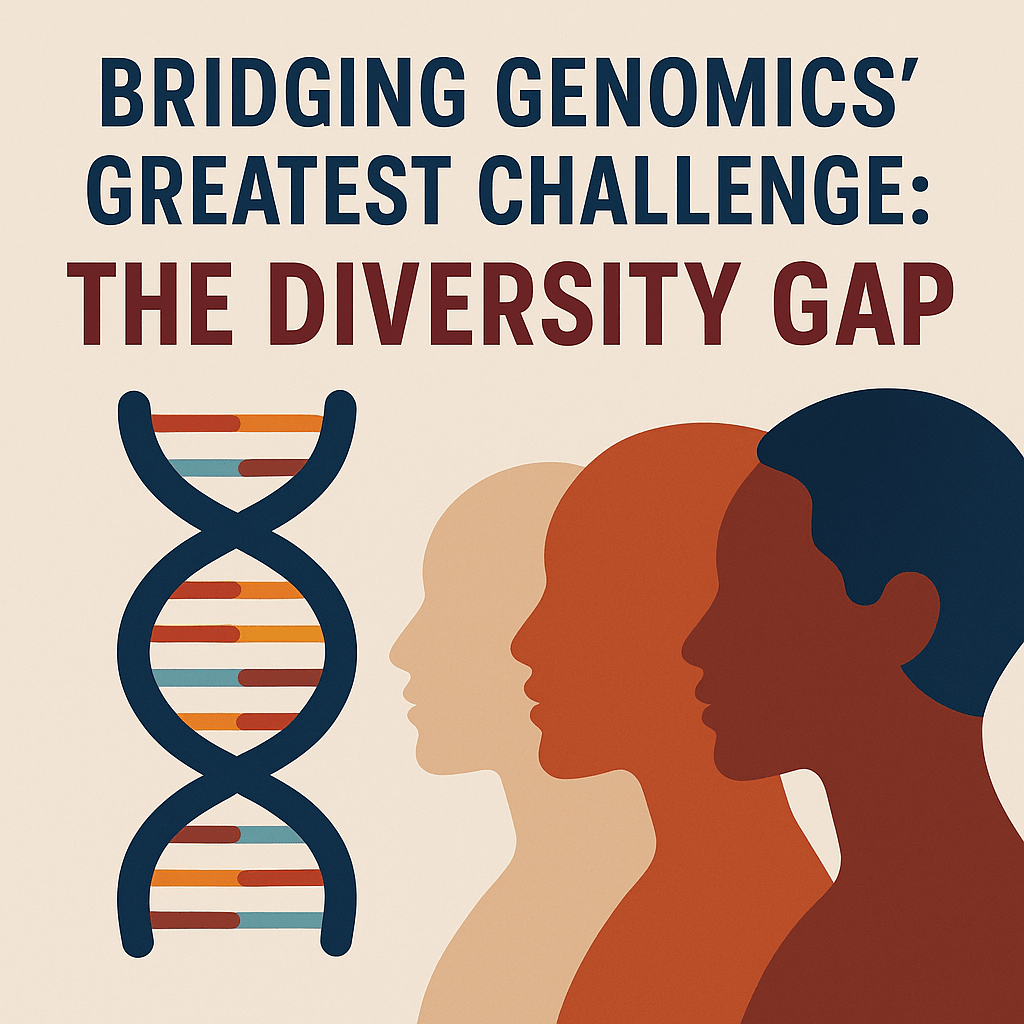
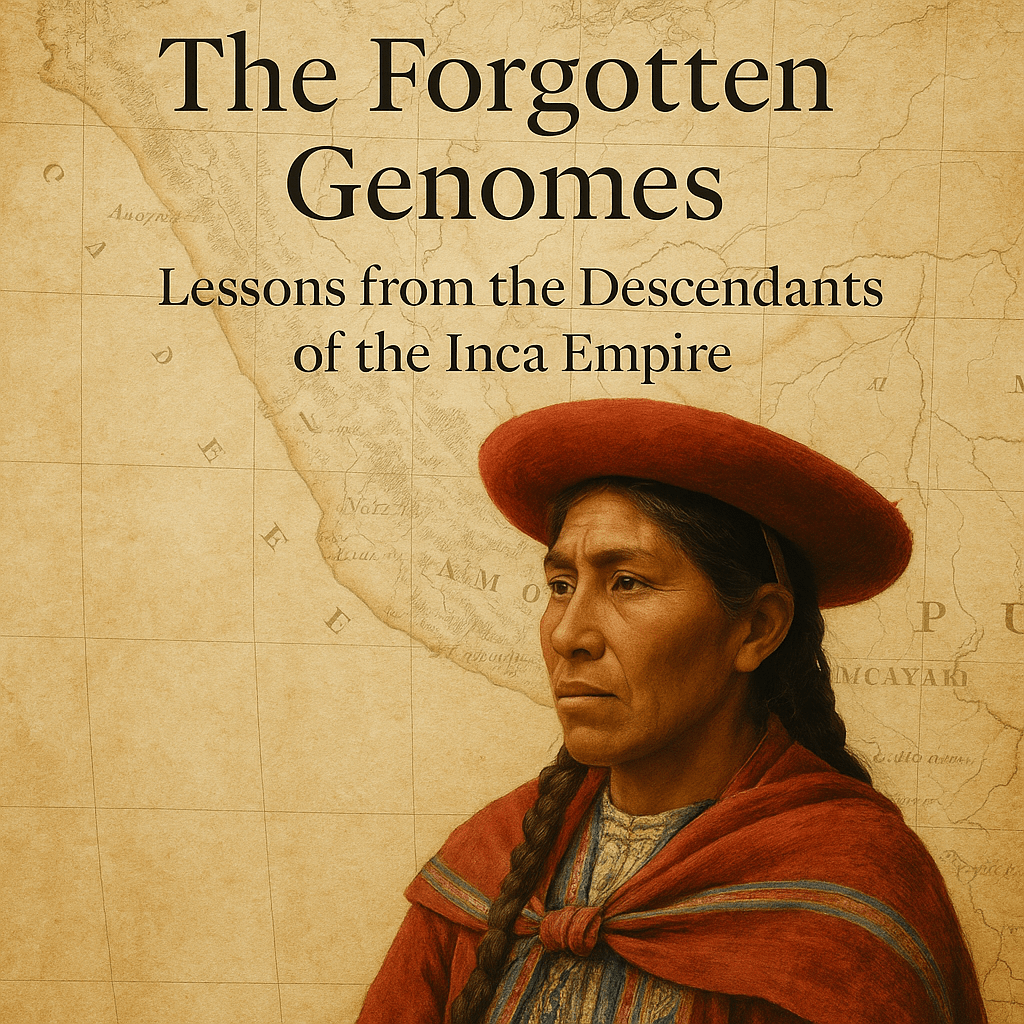
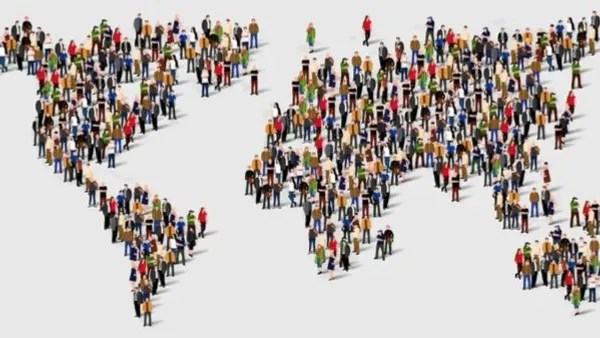
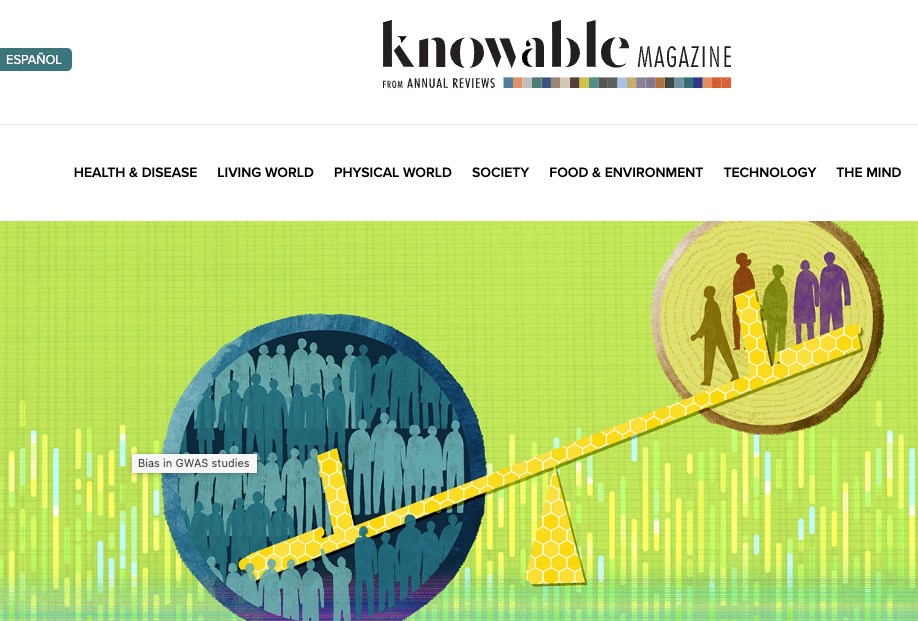
The genomic revolution is accelerating — but not evenly. While sequencing costs fall and AI reshapes discovery, vast populations remain outside the scope of genomic research. As we enter 2026, the challenge isn’t technology — it’s equitable inclusion. Who gets counted will determine who benefits from precision medicine.

Here are five imperatives to make equity measurable, actionable, and real.
1️⃣ Redefine Diversity Beyond Census Categories
Representation must capture genetic, environmental, and clinical variation — not just demographic labels. We need new frameworks like Health Equity-Informative Markers (HEIMs) to quantify whether datasets truly reflect global diversity.
2️⃣ Build Interoperable Global Data Ecosystems
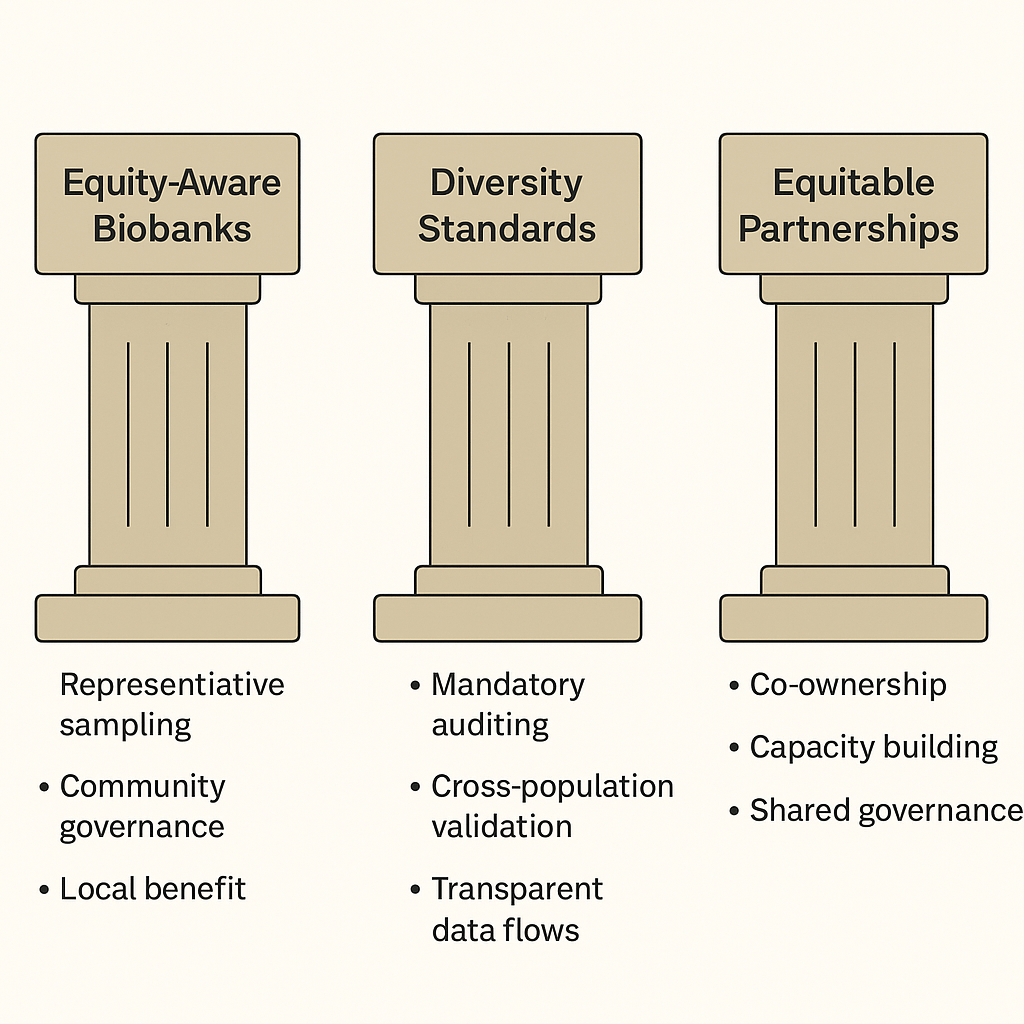
From UK Biobank to All of Us and H3Africa, the world’s genomic resources remain fragmented. FAIR+Equity principles — Findable, Accessible, Interoperable, Reusable, and Inclusive — must become the universal standard for connecting them.
3️⃣ Embed Ethical, Legal & Social Intelligence into AI
AI now drives variant interpretation and risk prediction, but bias lurks in training data. Equitable AI in genomics requires transparency, governance, and cultural context — algorithms that pass diversity stress-testing, not just accuracy benchmarks.
4️⃣ Empower Research Sovereignty
Global partnerships must move beyond data extraction. Building sequencing, cloud, and analytic capacity in low- and middle-income countries enables scientific sovereignty. Equity means local leadership and shared benefit.
5️⃣ Make Equity a Policy Requirement
By 2030, funders and journals should demand equity reports as routinely as open-data statements. We need measurable accountability: who is represented, who benefits, and how results are returned.
The next chapter of genomics isn’t about decoding DNA — it’s about encoding fairness.
How is your institution operationalising genomic equity for 2026? I’d love to hear your perspective.
#GenomicsForAll #HealthEquity #DataScienceInHealth #GlobalPrecisionMedicine




























 Manuel Corpas
Leave a comment