I write about genomics and about working with AI, for practitioners who need to apply it and for readers who want to think about where it leads. Newest first.
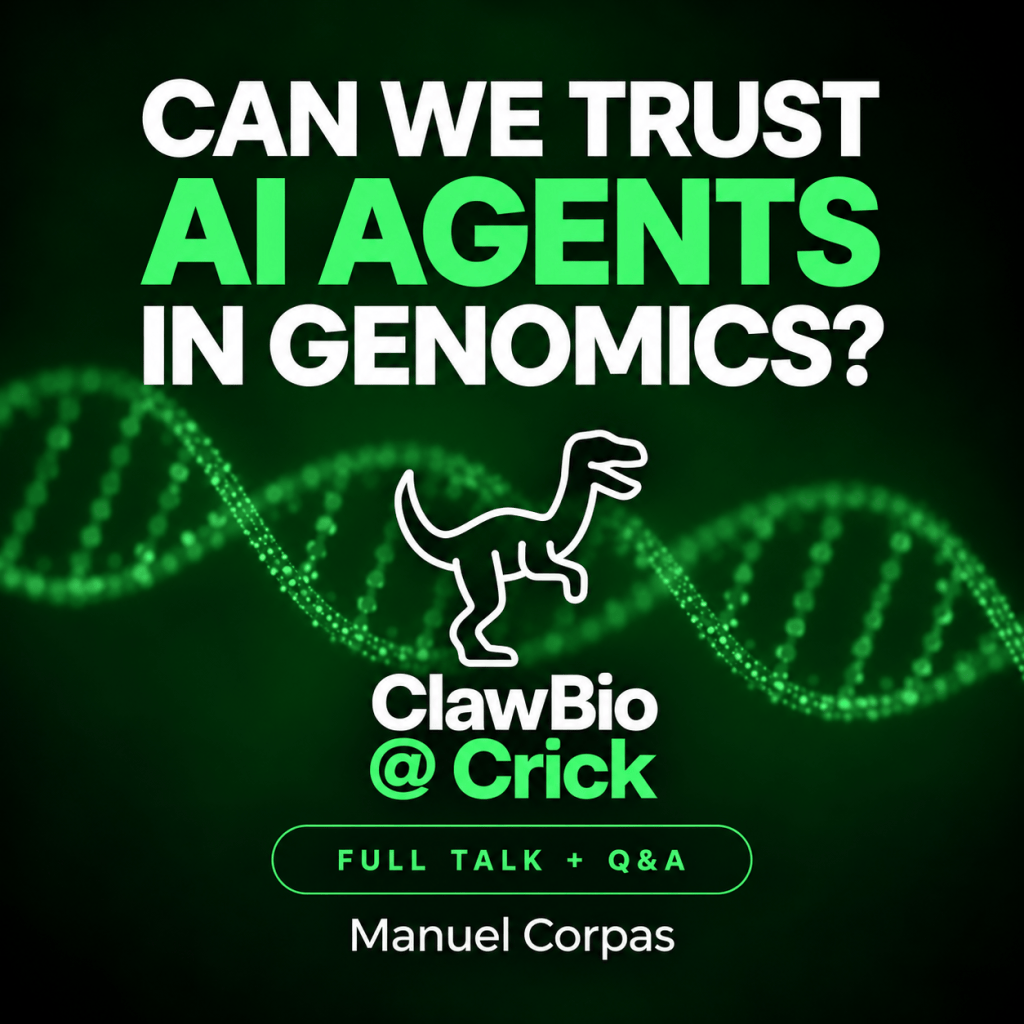
Build an Agentic Genomics System (From Scratch)
June 2026.
Genomics has always been gated by software rather than science: fragile pipelines, obscure file formats, and tools only specialists can run. AI agents change that. An agent does not just answer questions. It chooses a method, runs it, reads the result, and notices when it is wrong. This book teaches you to build agents like that from first principles.
Agentic AI: A Self-Study Book
June 2026.
Most teams can get an AI agent to work once, in a notebook. Almost none can get it to work on the thousandth real, adversarial, high-stakes request. That gap is not about access to a better model. As frontier models commoditise, the hard and durable work moves up the stack: system design, coordination, evaluation, observability. This book is a self-study route through that work.
AI Fluency
A Practical Guide to Leveraging AI Chatbots for Academic and Professional Work. January 2026.
AI fluency is not about prompts. It is about judgement. This is a disciplined, systems-level approach to working with AI as a cognitive partner in academic and professional settings. Rather than treating AI as a shortcut or a novelty, it shows how to bring it into serious knowledge work without giving up your standards.
Bioinformática Aplicada al Diagnóstico Genómico
Cómo Transformar Datos en Decisiones Precisas. In Spanish. January 2025.

A practical guide to applying bioinformatics in clinical diagnosis. It covers the tools and methods used to analyse genomic data, how to interpret the variants that matter, and worked cases on bringing genomic data into clinical practice. Written for clinicians who want to use genomics day to day, for researchers and bioinformaticians who want more depth on genomic diagnostics, and for students of medicine, biology and data science.
Kindle (included in Kindle Unlimited) | Paperback
Perfect DNA
A novel.

Set in the mid-2030s. John Malcolm, a middle-aged accountant in London, takes a comprehensive genetic test after his father dies suddenly. The test predicts life expectancy with startling accuracy, accidents aside. John’s result is exceptionally good. His wife Jessica’s is disturbingly bad. Their marriage does not survive the difference intact.
They consult Professor Riera, a genetic counsellor, who is astonished by how close to perfect John’s profile is. Pharmaceutical companies want to buy it for gene therapy development. The question the book turns on is whether John should sell his own genome to save his wife, or refuse and keep it private.
It is a book about genetic privacy, about what insurers, employers and governments would do with a number like that, and about what happens to a marriage when two people learn different things about their futures on the same afternoon.
Kindle | Paperback | Alternative edition: Perfect DNA: How perfect can your own genes be?
All editions
Every edition and format is listed on my Amazon author page.