Most people use AI as a faster search box.
The real leverage starts when you build skills that agents can execute repeatedly, reliably, and with human oversight.
Below is a practical list of 50 skills you can implement in an agentic system (like Corpas Core) to automate execution, reduce cognitive load, and compound output.
What is Corpas Core?
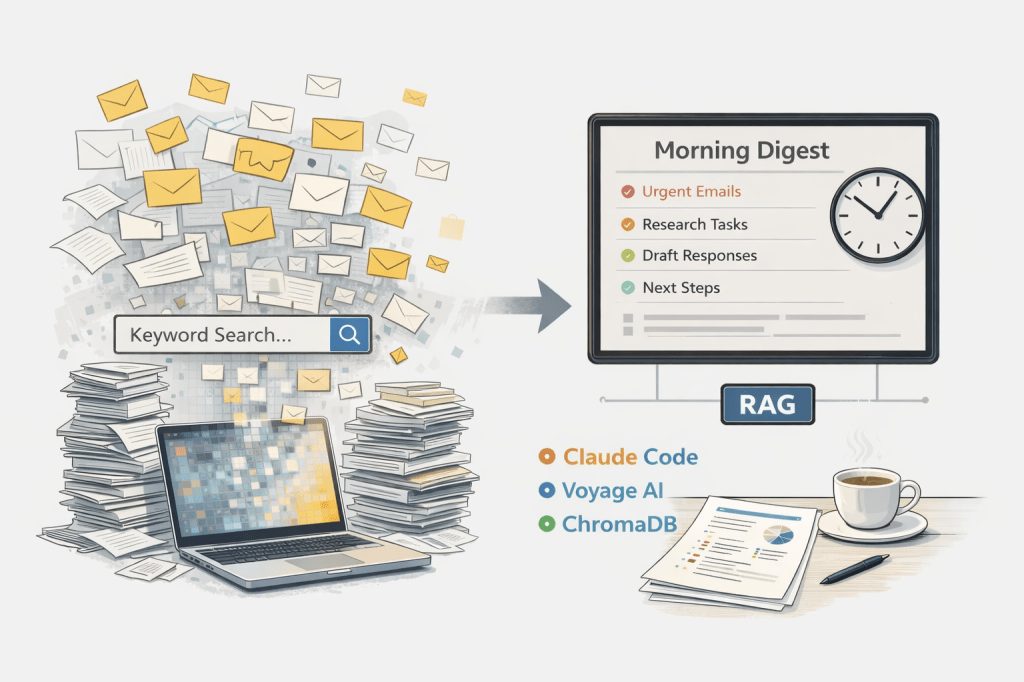
Corpas Core is a personal AI operating system: a structured memory layer plus a set of supervised agents that turn notes, emails, meetings, and ideas into tracked execution. In practice, it is the control center where context is stored, decisions are queued, automations are run, and approvals are enforced before sensitive actions.
Why Skills Matter
A skill is a reusable unit of capability.
It defines:
- what the agent should do
- what inputs it needs
- what output format it must return
- where human approval is required
The goal is not “more AI.”
The goal is more shipped outcomes per unit time.
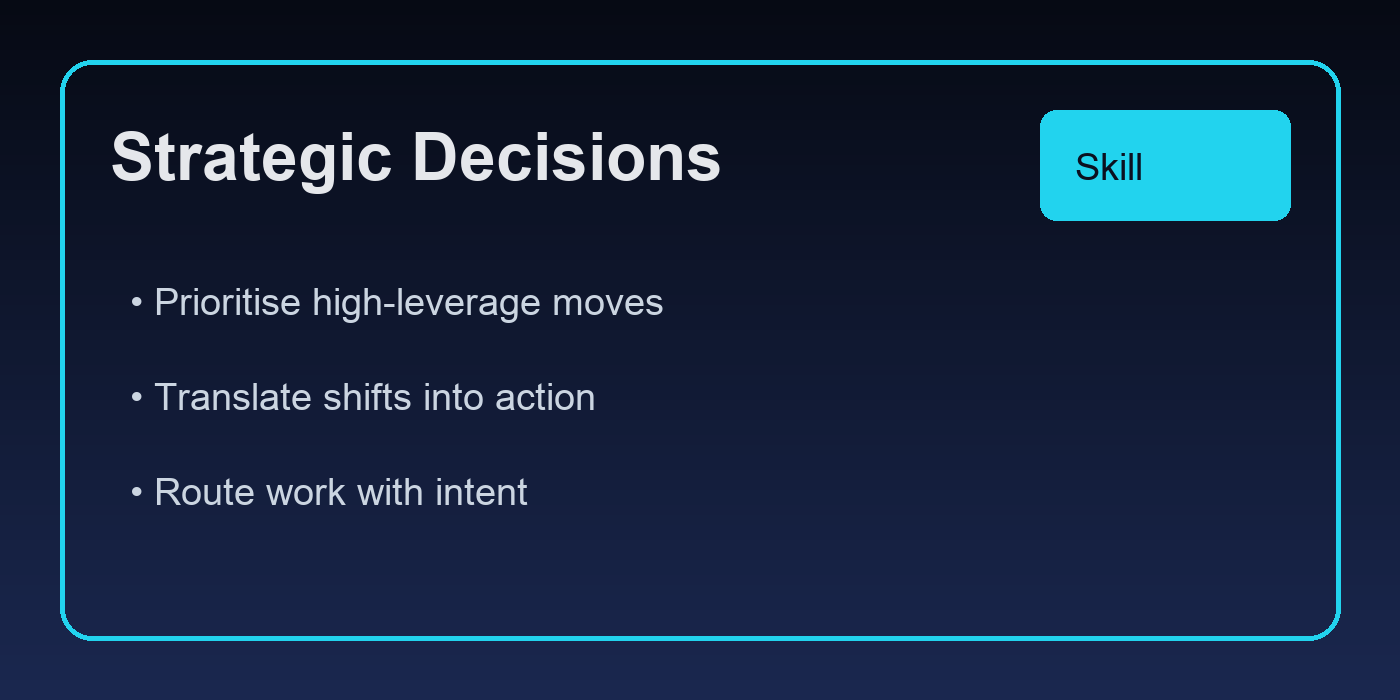
1) Strategic and Decision Skills
- ai-shift-brief
This skill scans relevant model/tool shifts and translates them into concrete implications for your current priorities.
It improves productivity by stopping random tool hopping and focusing your week on the 1-2 shifts that actually change output.
- early-advantage-scanner
This identifies where early AI adoption creates immediate asymmetry (speed, quality, or visibility) in your domain.
It improves efficiency by prioritizing opportunities with short feedback loops and high strategic return.
- adaptation-muscle-trainer
This creates a cadence of controlled experiments so adaptation becomes habitual, not occasional.
It improves productivity by reducing the cost of learning new tools and preventing stagnation.
- job-to-outcome-rewrite
This rewrites vague tasks into measurable outcomes with completion criteria.
It improves efficiency because agents perform better with explicit goals than with generic prompts.
- plain-english-build-spec
This turns non-technical intent into implementation-ready specifications for agents or developers.
It improves productivity by collapsing the translation gap between idea and execution.
- human-edge-mapper
This maps which parts of a workflow require judgment, trust, and contextual interpretation.
It improves efficiency by reserving human time for high-value cognitive work and delegating the rest.
- ai-vs-human-routing
This routes tasks to AI-first, human-first, or hybrid pathways based on risk, ambiguity, and structure.
It improves productivity by reducing decision friction on who should do what.
- decision-ops-console
This consolidates pending decisions, blockers, deadlines, and risk signals in one control layer.
It improves efficiency by preventing important decisions from being buried in chat or inbox threads.
- output-not-activity-score
This measures value based on shipped artifacts and impact rather than visible busyness.
It improves productivity by aligning behavior with outcomes instead of task volume.
- mindset-to-action-converter
This translates uncertainty, anxiety, or strategic intent into next-week executable steps.
It improves efficiency by eliminating analysis paralysis and creating momentum quickly.
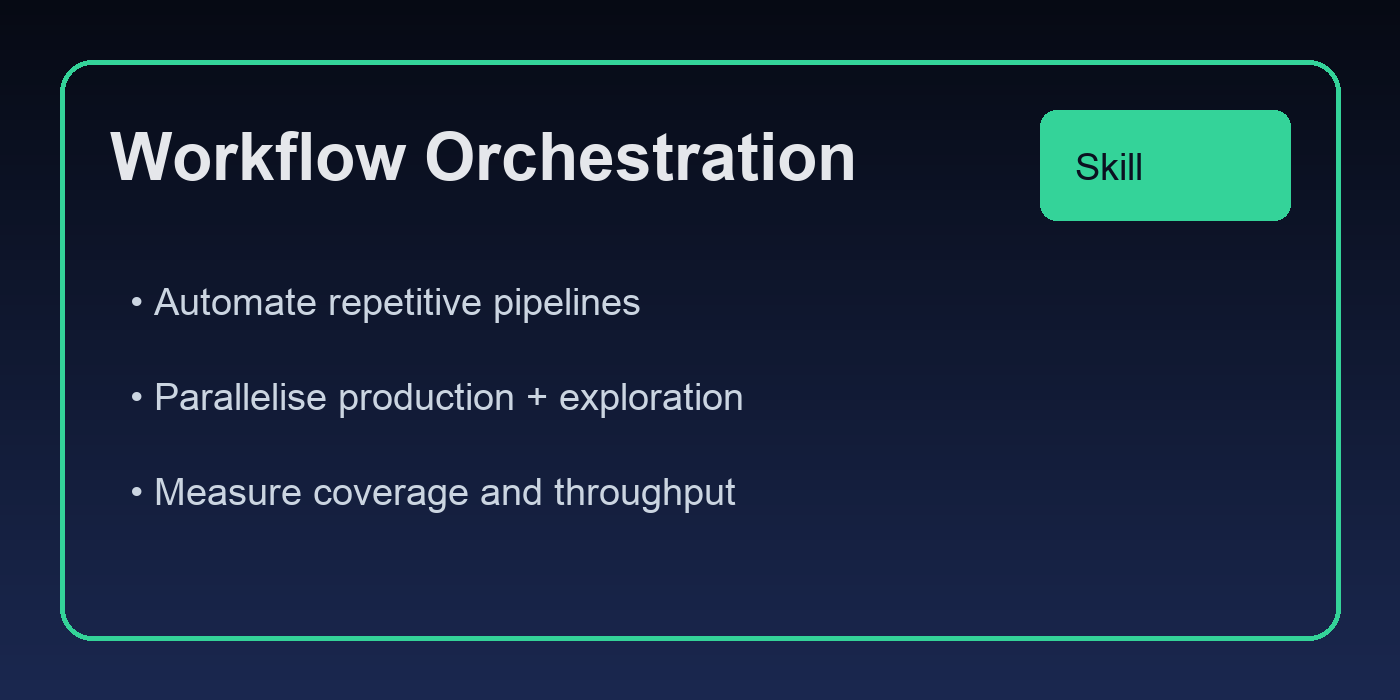
2) Workflow and Orchestration Skills
- agentic-pipeline-orchestrator
This connects multi-step workflows across agents with handoffs, retries, and state tracking.
It improves productivity by moving from one-off prompts to durable execution pipelines.
- micro-agent-factory
This rapidly spins up narrow-purpose agents for recurring tasks.
It improves efficiency by avoiding overgeneralized agents and reducing complexity per workflow.
- delegate-by-default
This forces each incoming task into automate, delegate, or manual pathways.
It improves productivity by preventing unnecessary personal involvement in low-leverage work.
- scope-doubler
This separates production work from exploration work so both can move in parallel.
It improves efficiency by protecting innovation without blocking delivery.
- autonomous-build-sprint
This runs a timed cycle of build, test, and refine with minimal supervision.
It improves productivity by compressing iteration cycles and reducing coordination overhead.
- pipeline-coverage-map
This maps what percentage of key workflows is automated versus manual.
It improves efficiency by making automation gaps explicit and prioritizable.
- headcount-delay-planner
This identifies processes where automation can absorb load before hiring.
It improves productivity by increasing throughput per person and lowering operating cost.
- ops-leverage-score
This tracks time saved, throughput gained, and reliability improvements from automations.
It improves efficiency by giving a quantitative basis for what to scale or retire.
- transition-carnage-monitor
This watches for failure modes during AI adoption: quality drops, rework spikes, and misroutes.
It improves productivity by detecting hidden regressions early before they become systemic.
- underestimate-risk-watch
This flags areas where your assumptions underestimate pace-of-change or disruption risk.
It improves efficiency by forcing proactive adaptation instead of reactive catching up.
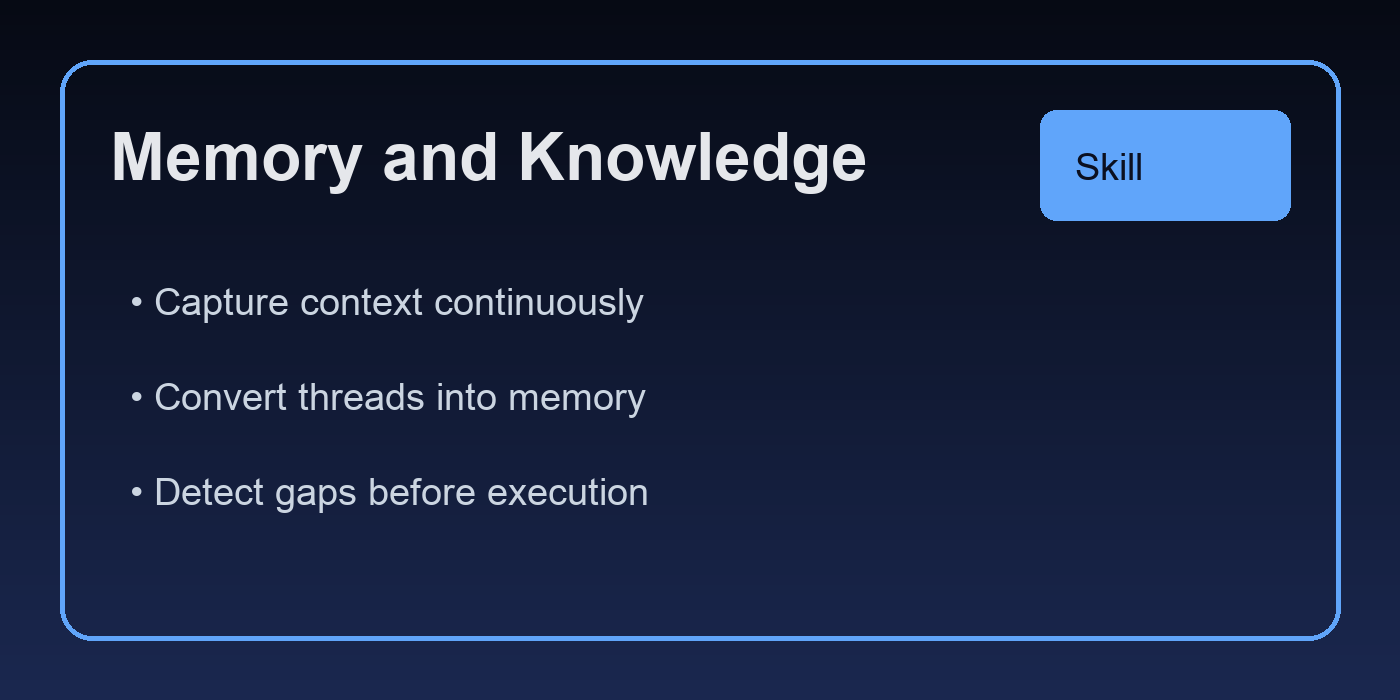
3) Memory and Knowledge Skills
- context-packet-live
This generates a compact brief with current priorities, constraints, and relevant history.
It improves productivity by reducing context-switch costs before execution starts.
- thread-to-memory
This converts important conversations into structured, searchable memory entries.
It improves efficiency by preventing repeated discussions and loss of key decisions.
- knowledge-gap-detector
This identifies missing context before work begins (dependencies, owner gaps, undefined outcomes).
It improves productivity by reducing avoidable rework and execution drift.
- seen-unseen-analyser
This evaluates visible outcomes and hidden second-order effects of decisions.
It improves efficiency by improving strategy quality and reducing blind-spot costs.
- opportunity-forming-now
This surfaces opportunities unlocked by recent tools, data, or market changes.
It improves productivity by converting ambient change into actionable advantage.
- single-person-scale-playbook
This designs systems where one operator can deliver output equivalent to a small team.
It improves efficiency by codifying leverage patterns and reusable workflows.
- weekly-notes-synthesis
This mines your weekly notes for patterns, constraints, and strategic signals.
It improves productivity by converting unstructured thought into execution priorities.
- notes-change-intake
This ingests only new or changed notes instead of full reprocessing.
It improves efficiency by avoiding duplicate work and reducing noise in task pipelines.
- notes-to-execution
This converts notes into ranked tasks with priority and status states.
It improves productivity by turning captured ideas into tracked action immediately.
- memory-quality-audit
This checks for stale entries, duplication, schema drift, and missing metadata.
It improves efficiency by keeping the memory layer reliable as decision infrastructure.
4) Approval and Governance Skills
- human-in-the-loop-enforcer
This blocks outbound sensitive actions unless explicit approval is present.
It improves productivity by enabling safe automation at scale without governance breakdown.
- approval-gate-enforcer
This applies policy-based approval logic by action type and risk level.
It improves efficiency by standardizing review pathways and reducing ad hoc decisions.
- risk-watchdog
This continuously monitors deadlines, compliance issues, and execution risk signals.
It improves productivity by escalating high-risk items early while there is time to respond.
- decision-packet
This provides the top three decisions, risks, and next actions in one briefing.
It improves efficiency by minimizing decision latency for leadership workflows.
- policy-check-before-send
This runs policy, tone, and compliance validation before outbound communication.
It improves productivity by reducing correction cycles and reputational risk.
- audit-trail-writer
This records meaningful agent actions and decisions in a traceable log.
It improves efficiency by enabling accountability, debugging, and retrospective learning.
- confidence-threshold-router
This routes low-confidence outputs to human review before execution.
It improves productivity by preserving speed for high-confidence cases and safety for uncertain ones.
- critical-action-lock
This prevents autonomous execution on high-impact or irreversible operations.
It improves efficiency by protecting against catastrophic mistakes while keeping routine automation fast.
- exception-escalator
This detects anomalies and routes them to the right reviewer with context.
It improves productivity by reducing time-to-resolution for non-standard failures.
- reversal-safe-mode
This prioritizes reversible automation patterns and rollback capability.
It improves efficiency by making experimentation safer and adoption faster.
5) Content and Communication Skills
- blog-from-prompt
This generates complete blog drafts from concise strategic prompts.
It improves productivity by reducing idea-to-publication cycle time.
- artifact-shipper
This converts internal analysis into external, citable artifacts.
It improves efficiency by turning hidden work into visible leverage.
- accepted-draft-archive
This archives approved responses into searchable notes/memory automatically.
It improves productivity by preserving reusable language and reducing repeat drafting.
- substack-ready-formatter
This transforms raw drafts into publication-ready Substack structure and style.
It improves efficiency by removing formatting overhead from publishing workflows.
- thread-to-post
This converts long discussions into concise social posts with clear narrative.
It improves productivity by extracting distribution assets from existing conversations.
- preprint-launch-pack
This builds a dissemination package for new preprints (summaries, threads, outreach angles).
It improves efficiency by standardizing launch operations across publications.
- research-to-brief
This condenses technical research into executive brief format.
It improves productivity by accelerating decision-making for non-specialist stakeholders.
- voice-to-task
This converts voice notes into structured tasks and approval items.
It improves efficiency by capturing ideas in motion without later manual transcription.
- meeting-to-execution
This transforms meeting output into owners, actions, and deadlines.
It improves productivity by collapsing the post-meeting lag between discussion and execution.
- weekly-shipping-review
This reviews what shipped, what stalled, and what must ship next.
It improves efficiency by creating a weekly compounding loop driven by artifacts.
Implementation Principles
If you only remember five rules, remember these:
- Start with repetitive pain, not fancy demos.
- Keep every skill narrow and testable.
- Enforce approvals on external and high-risk actions.
- Track outcomes, not tool usage.
- Ship skills weekly and iterate from real use.
Final Thought
The gap is no longer AI access.
The gap is operational design.
People who define reusable skills, wire them into memory, and run them with discipline will not just “use AI well.”
They will build systems that make high output inevitable.






































 Manuel Corpas
Leave a comment