Agentic genomics is the delegation of multi-step genomic analyses to autonomous software agents that select tools, manage dependencies and adapt execution in response to intermediate results, mediated by large language models and constrained by domain-specific skill libraries.
The term was coined and defined by Manuel Corpas, Heinner Guio and Segun Fatumo in Cell Genomics on 21 July 2026. This page is the canonical record: the citation, the definition, the evidence and every open material.

Who coined the term agentic genomics?
Manuel Corpas, with Heinner Guio and Segun Fatumo. The coining sentence appears in the paper’s abstract:
“Genomics has entered a phase in which AI agents can autonomously discover, configure, execute, and chain bioinformatics operations from natural-language instructions. We term this paradigm ‘agentic genomics’.”
Cite as: Corpas M, Guio H, Fatumo S (2026). Agentic genomics: from pipeline automation to autonomous validation. Cell Genomics 101305. doi.org/10.1016/j.xgen.2026.101305. PMID 42480539.
What does the paper argue?
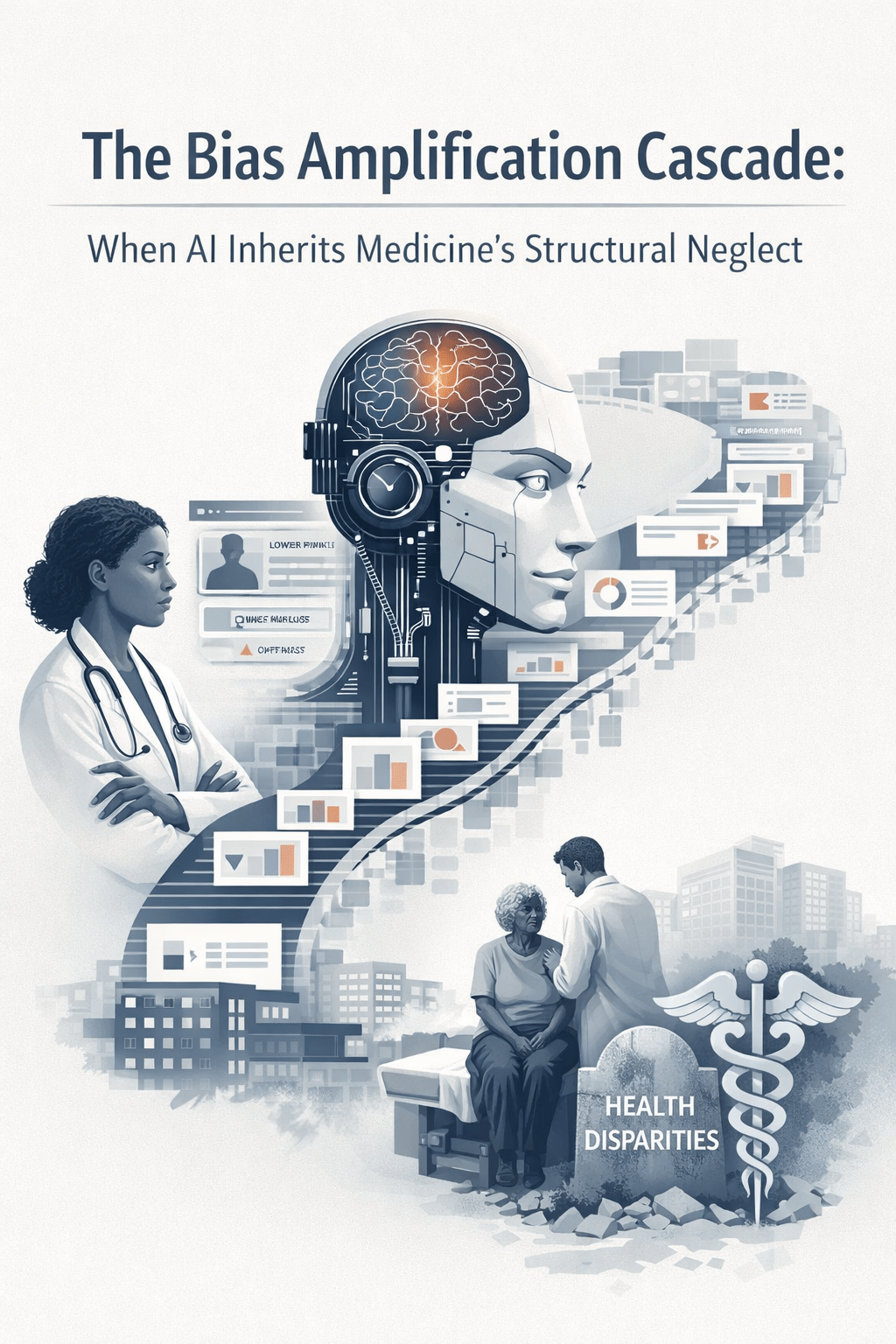
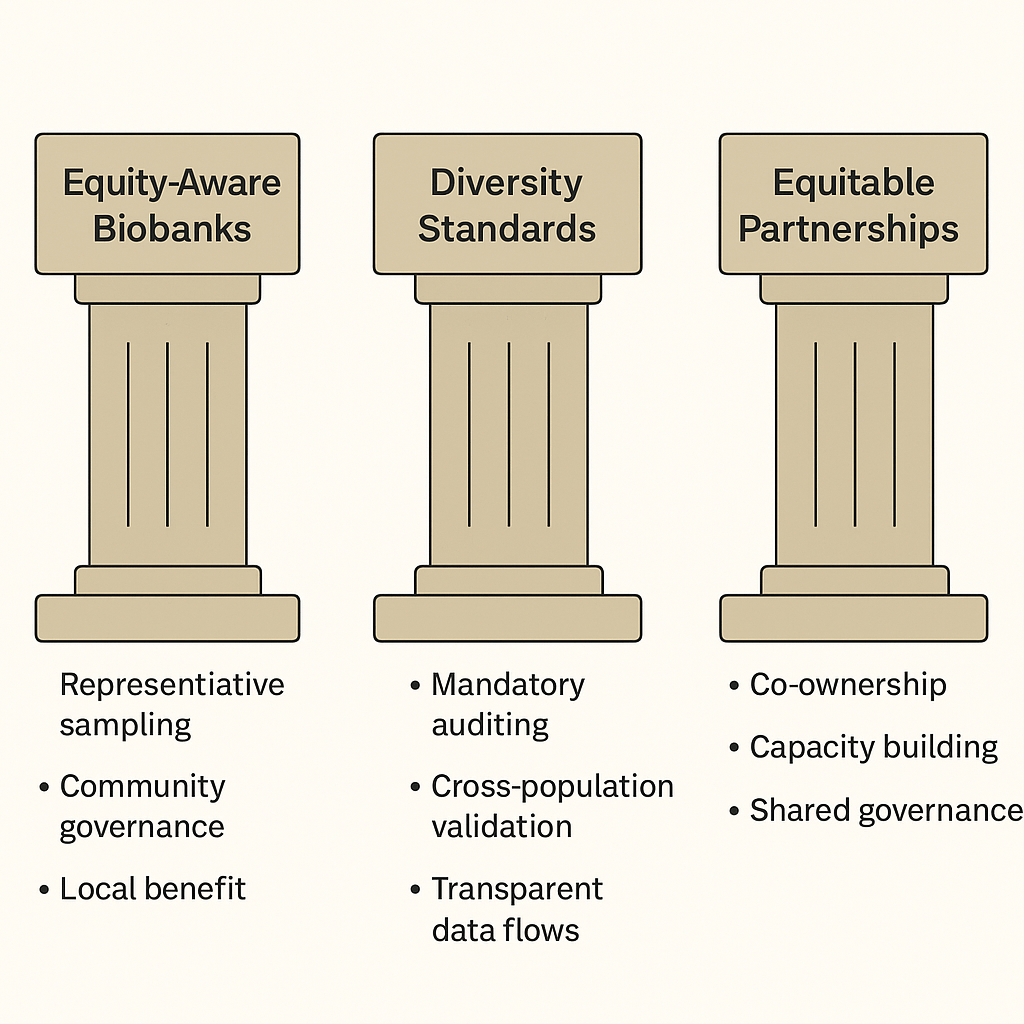
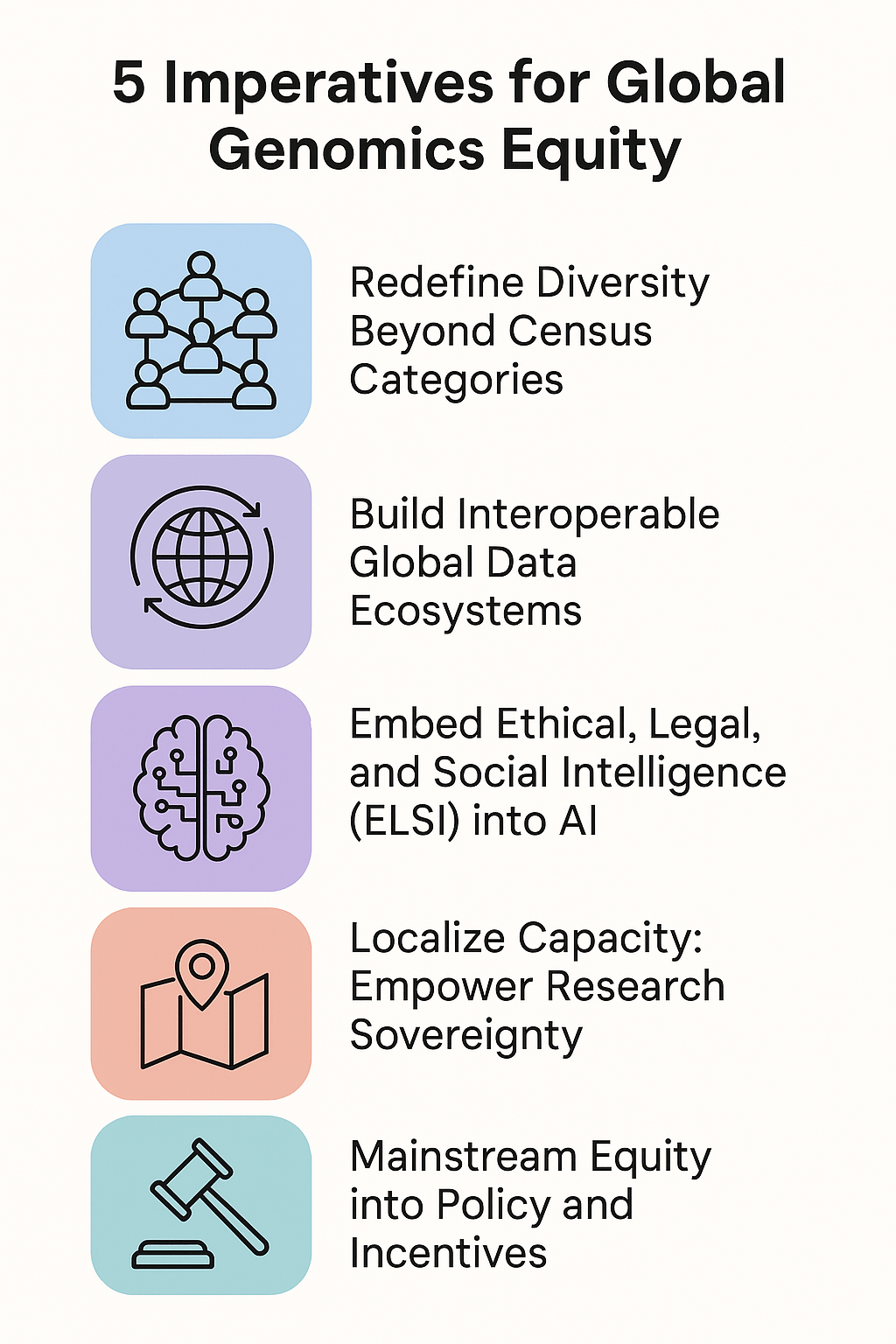
That agentic genomics shifts the bottleneck in computational biology from pipeline construction to validation. It examines the emerging systems, including CellAtria, AutoBA, Bio-Copilot and ClawBio, and assesses their divergent architectures. It proposes a tiered validation framework spanning research-grade, benchmarked and clinical-grade analyses, and argues that equity-aware design must be a systems requirement rather than an optional aspiration.
What is the empirical evidence?
The first large-scale controlled evaluation of where correctness must reside inside an agentic genomic pipeline. Using pharmacogenomics, a domain where errors are measurable and sometimes lethal: five matched configurations, eight frontier large language models, 110 CPIC cases, 13,200 attempted evaluations, star-allele interpretation in 7,241 individuals, and comparison against consensus genotypes for 113 GeT-RM reference samples.
- Accuracy follows how the validated decision logic is represented, not which model applies it.
- Authored, versioned, structured rules supported high accuracy under both generation and execution.
- Retrieval over guideline prose did not, and on categorical contraindication cases it increased lethal-class errors.
- Execution buys determinism, auditability, explicit abstention and error localised to a single step. It does not buy accuracy.
- Model choice still matters at input interpretation: given variants alone the strongest model emitted a call on 93.4% of inputs but was correct on 39.6% of them, rising to 96.7% when given the same allele-definition table the deterministic caller uses.
Cite as: Corpas M, Iacoangeli A, Bourdenx M, Aldraimli M, Jabalameli MR, Skene N, Fatumo S, Guio H (2026). Trustworthy agentic genomics requires validated skills, not better models. bioRxiv. doi.org/10.64898/2026.06.11.731523
Scope. These are engineering properties, not evidence of full clinical validation. That would additionally require non-canonical inputs, real-world genomic and clinical data, human comparators, multi-site concordance and independent rule adjudication.
Timeline of the record
- 26 February 2026. ClawBio introduced publicly at the London Bioinformatics Meetup.
- 7 March 2026. First public live demonstration, DoraHacks Demo Day, Imperial College London.
- 9 March 2026. Essay: Agentic Genomics: Why the Future of Biology Belongs to AI Agents.
- 29 April 2026. UK Dementia Research Institute seminar, Imperial College London.
- 15 June 2026. Empirical preprint posted to bioRxiv.
- June 2026. Book published: Build an Agentic Genomics System (From Scratch).
- 14 July 2026. RNA Ideathon, Francis Crick Institute, London.
- 21 July 2026. Cell Genomics paper published. The term is defined in the literature.
- 13 June 2027. Invited educational lecture, European Society of Human Genetics, Rotterdam, in the session The Rise of Agentic AI.
Open materials
- ClawBio, the open trust layer: github.com/ClawBio and docs.clawbio.ai. 1,061 stars, 234 forks, 44 contributors.
- ClawBench, the benchmark: github.com/ClawBio/ClawBench
- GenomeQA, evaluation for provenance-grounded agents: genomeqa.clawbio.ai
- The Conversational Genome, a live demonstration on a real 30x whole genome: conversational.clawbio.ai
- Talks and recordings: YouTube and the full engagements list
- Community and events: luma.com/clawbio. 1,380 people have taken part.
Why the paradigm needed a name
Because genomics is adopting agent-mediated systems faster than it is building the means to trust them. Naming the architecture makes it possible to specify what validating it requires. Without the name, each system is judged on task accuracy alone, and the question of where correctness must live is never asked.
More on the fifteen-year path that led here: manuelcorpas.com. Full publication record: all 69 publications, ORCID, Google Scholar.