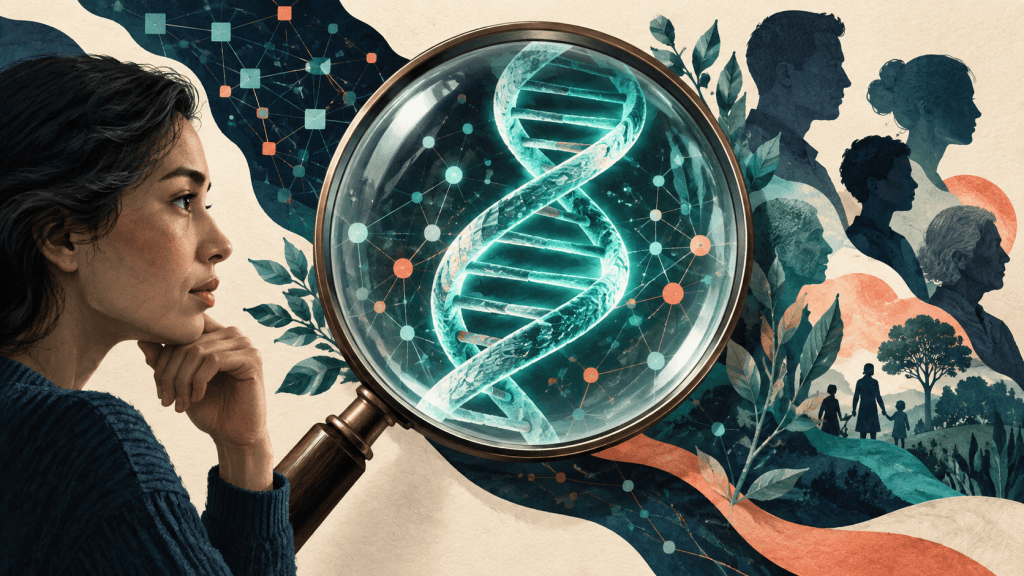
An AI gives you a clear, confident explanation of a genetic result. It sounds knowledgeable. It even includes references. What would make that answer worth trusting?
That question sits at the centre of my work in genomics and AI. I want more people to be able to ask it, without needing to learn programming or read a technical benchmark first.
A genome is an organism’s complete set of DNA. Genomics studies that information and how it relates to biology. AI can help researchers work with it, but an impressive explanation is only the beginning of the evidence.
1. What did the AI actually do?
Did it summarise a document? Look something up? Run an analysis? These are different activities. A paragraph describing a calculation does not show that the calculation happened.
Imagine asking an assistant to check a spreadsheet. You would want to know whether it opened the file and calculated the totals, or simply described what the totals might mean. The same distinction matters in science.
2. Can someone check the steps?
I want a record of the inputs, the tools used and the results they produced. A useful scientific system should make it possible to trace a claim back to the work behind it.
Repeating an analysis is valuable, but it is not proof that the method is right. A mistake can be repeatable too.
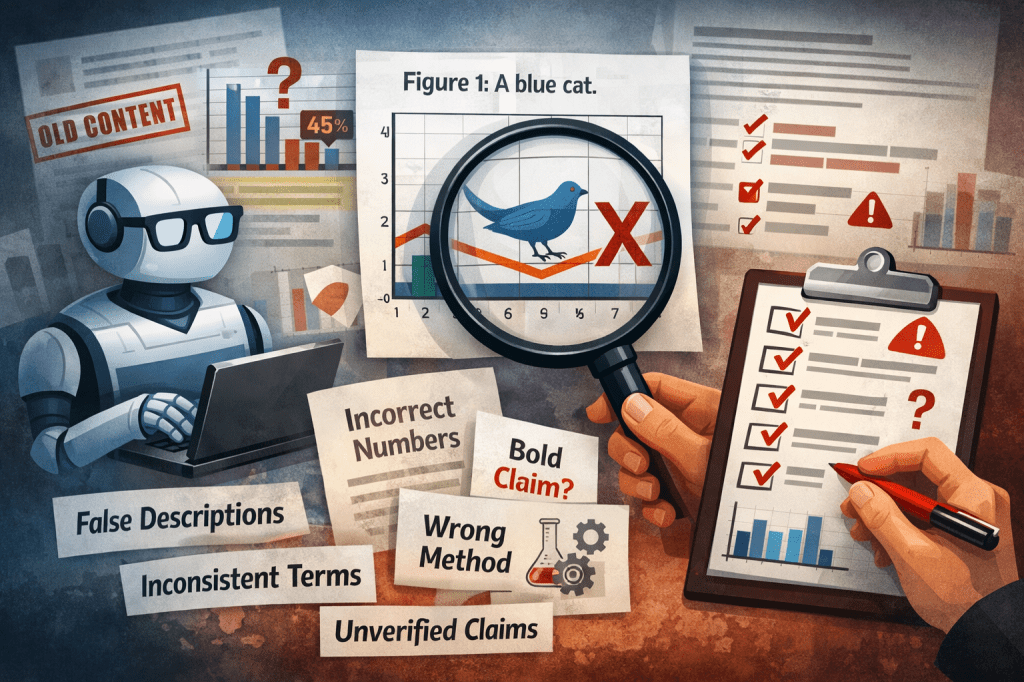
3. What evidence supports the conclusion?
A source should support the particular claim being made. A real paper with an impressive title is not enough. Ask what was measured, what was compared and how the conclusion follows.
4. Who was represented?
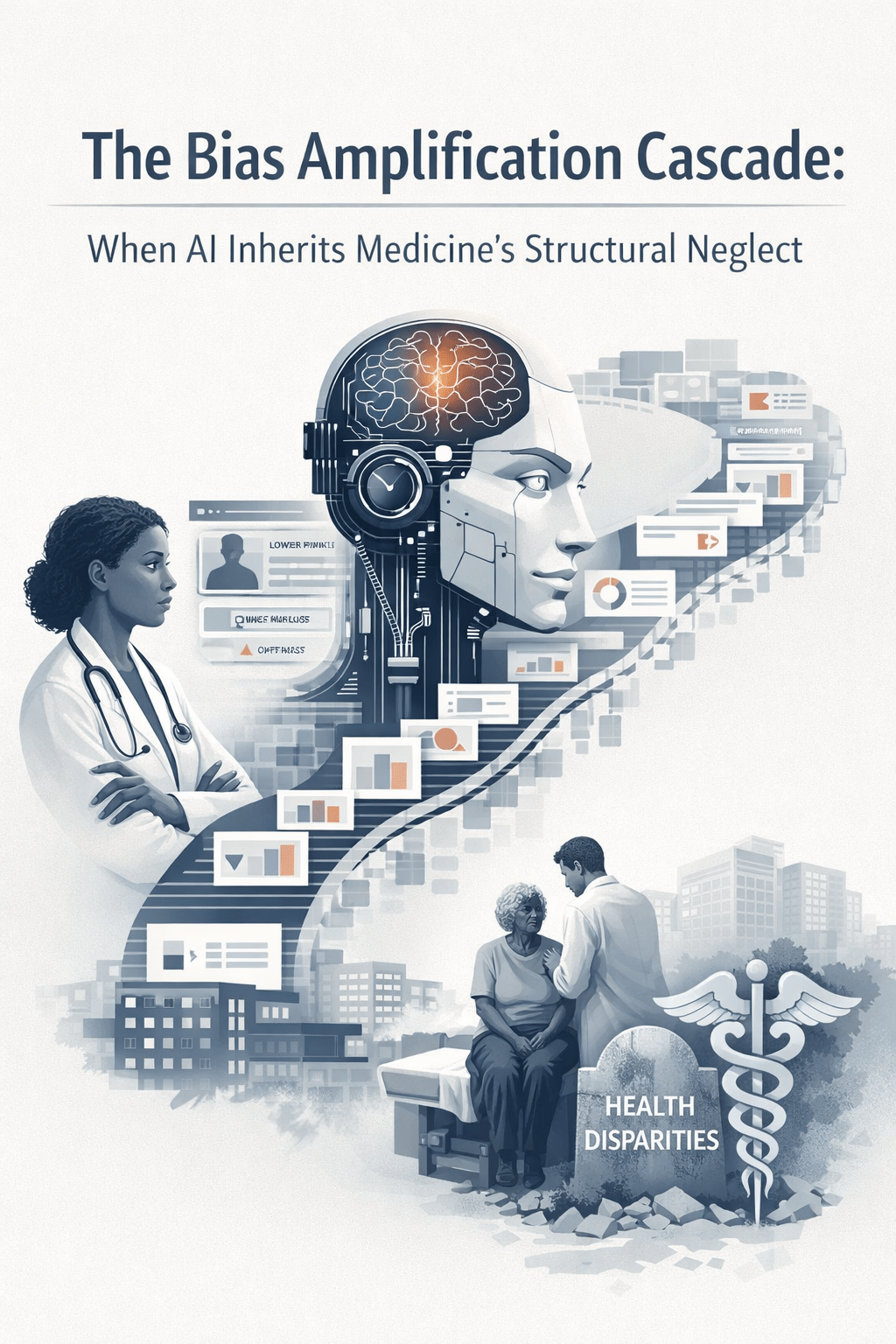
Genomic research has historically included far more people of European ancestry than many other populations. That leaves gaps in knowledge, as the US National Human Genome Research Institute explains. When someone claims a genomic tool works, I want to know for whom it was evaluated. A single headline score can hide important differences.
5. When should it say “I don’t know”?
Missing information should be visible. A system that explains why it cannot answer gives us something useful: the boundary of its evidence. Confidence without that boundary is hard to assess.
My practical test
Ask for the answer, the evidence, the steps and the limits. You do not need to inspect every line of code yourself to expect those things to exist.
I am building ClawBio, an open-source project that helps AI agents use bioinformatics tools. I am its founder, so I have a direct interest in it. Open code and repeatable steps help people inspect work; they do not, by themselves, establish that every result is scientifically or clinically valid.
This is the first in a short series about AI and our genomes, written for curious people rather than only specialists. Next: what changes when an AI starts doing scientific work instead of just answering questions?
The research behind these questions
In our Cell Genomics perspective, Agentic genomics: From pipeline automation to autonomous validation (2026), Heinner Guio, Segun Fatumo and I argue that making an analysis easier to run makes careful validation more important. This is a framework for asking what evidence is needed, not a claim that AI is ready for every clinical task.
The question about representation also has a research basis. Alicia Martin and colleagues’ 2019 work examined differences in genetic risk prediction across ancestry groups and warned that unequal representation could widen health disparities. It is a reason to ask who was tested, rather than assume one headline result applies to everyone.
If you know someone who follows AI but finds genomics difficult to enter, send them this guide. Subscribe using the form below for the next explanation. Which of these five questions would you most want an AI developer to answer?



























Leave a Reply