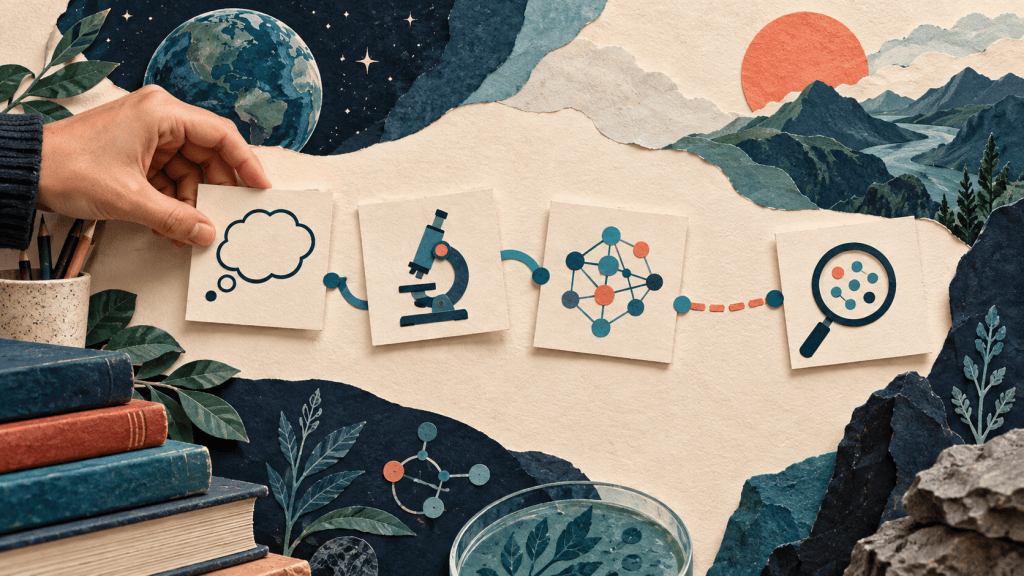
There is a useful difference between an AI explaining how to do an experiment and an AI taking steps in an analysis.
Think about the difference between receiving a recipe and having someone prepare a meal. Reading the recipe tells you what should happen. Preparing the meal introduces choices, tools, ingredients and opportunities for mistakes.
In scientific computing, an AI agent can select tools, run tasks and use intermediate results to decide what to do next. That makes the record of what happened especially important.
A simple example
Suppose a researcher asks for a comparison of two public datasets. An assistant might describe an appropriate statistical method. An agent might also load the files, check their format, run a tool and produce a report. This is an illustrative workflow, not a claim about a particular experiment.
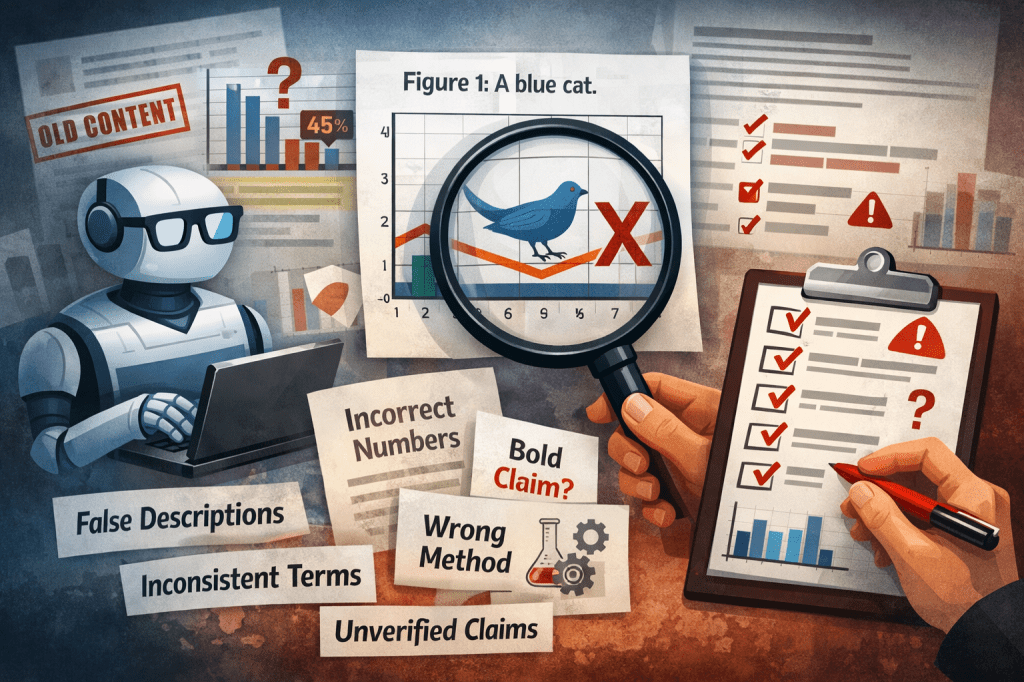
We should then be able to ask: were the right files used? Were any observations excluded? Which version of the software ran? Was the comparison appropriate? Can another person inspect the result?
More action means more to check
A polished report answers none of those questions on its own. Nor does a successful software run establish that the scientific interpretation is correct. A program can finish normally while answering the wrong question.
This is why my work on agentic genomics focuses on making the work inspectable. In plain English, I want AI-assisted genomic analyses that people can trace, repeat and challenge.
ClawBio is one open-source project I founded to work on that problem. It is a contribution to the task, not a guarantee that an agent is always right.
For anyone following scientific AI, my suggestion is simple: when you see a compelling demo, ask to see the work behind the answer. Then ask what would count as evidence that it failed.
From the idea to published research
A concrete example comes from Daniil Boiko, Robert MacKnight, Ben Kline and Gabe Gomes’ Autonomous chemical research with large language models (Nature, 2023). Their Coscientist system combined language models with tools to plan and execute chemistry experiments. It was a bounded proof of concept, not evidence that a machine can independently solve any scientific problem.
In genomics, Heinner Guio, Segun Fatumo and I explore the next question in our 2026 Cell Genomics perspective, Agentic genomics: From pipeline automation to autonomous validation: as building an analysis becomes easier, how do we establish that its results deserve trust? Our perspective sets out validation requirements; it does not make a blanket claim of clinical readiness.
Share this explanation with someone who is trying to understand AI agents. Subscribe below for the next part of this series: why “who was included?” belongs in the conversation about accuracy.























Leave a Reply