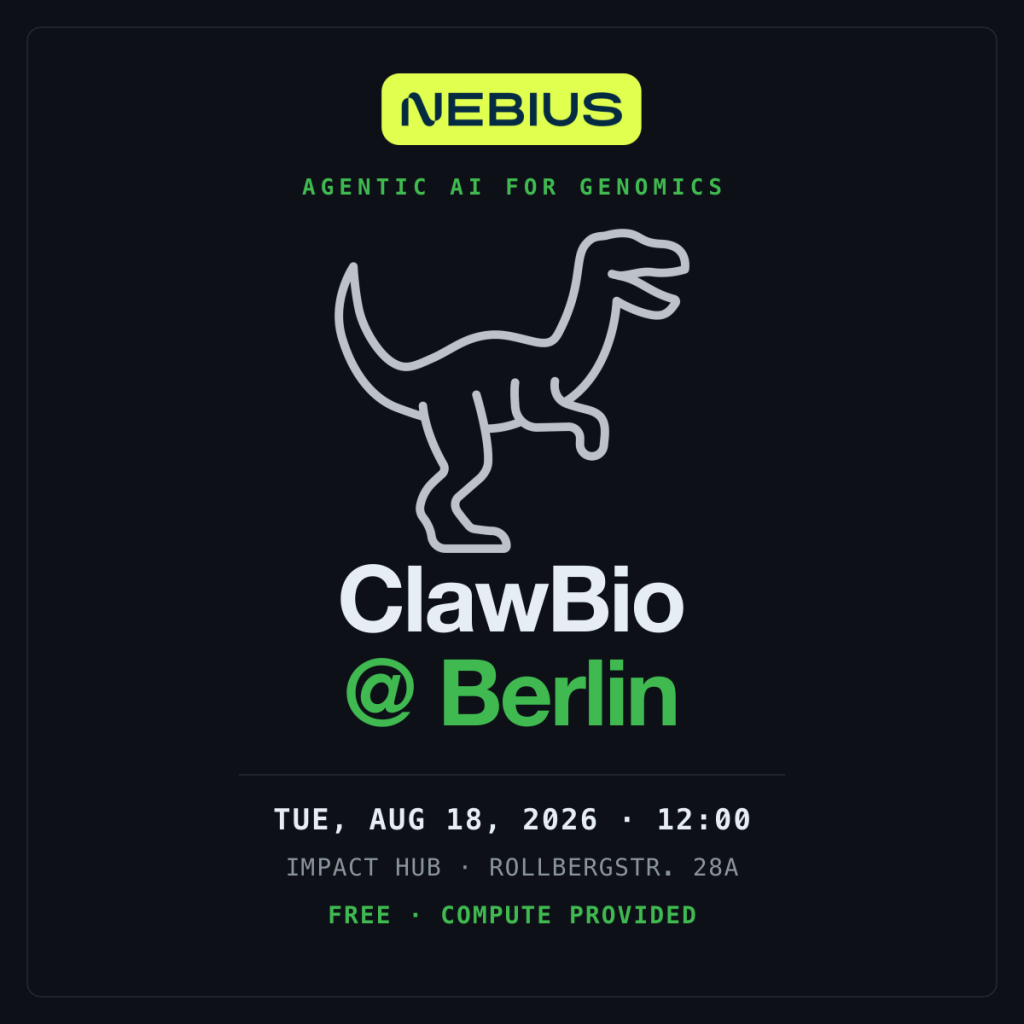
On Saturday 5 and Sunday 6 December 2026, ClawBio comes to Sidra Medicine in Doha for two days of building AI agents for precision health. It is the first hackathon of its kind in the Middle East, and it runs the weekend before the 12th PMFG Summit (Precision Medicine and the Future of Genomics, 7 to 9 December, Qatar National Convention Centre).
Registration is free and open now: luma.com/clawbio-mzh0
Why we are doing this
AI agents can now plan an analysis, run the tools, check the result and write it up. In genomics and medicine that only counts if someone else can inspect what the agent did, rerun it and get the same answer.
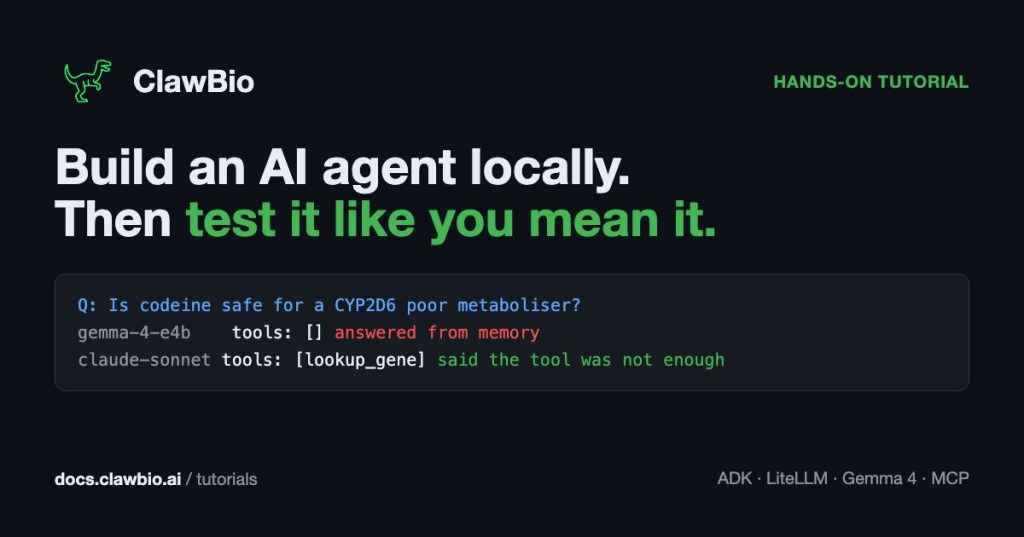
That is what we will practise for two days. We use ClawBio, an open-source project in which agents work through written, versioned skills, so every step they take is on the record. Today it has 110 skills and 1,183 GitHub stars.
What happens
Saturday 5 December
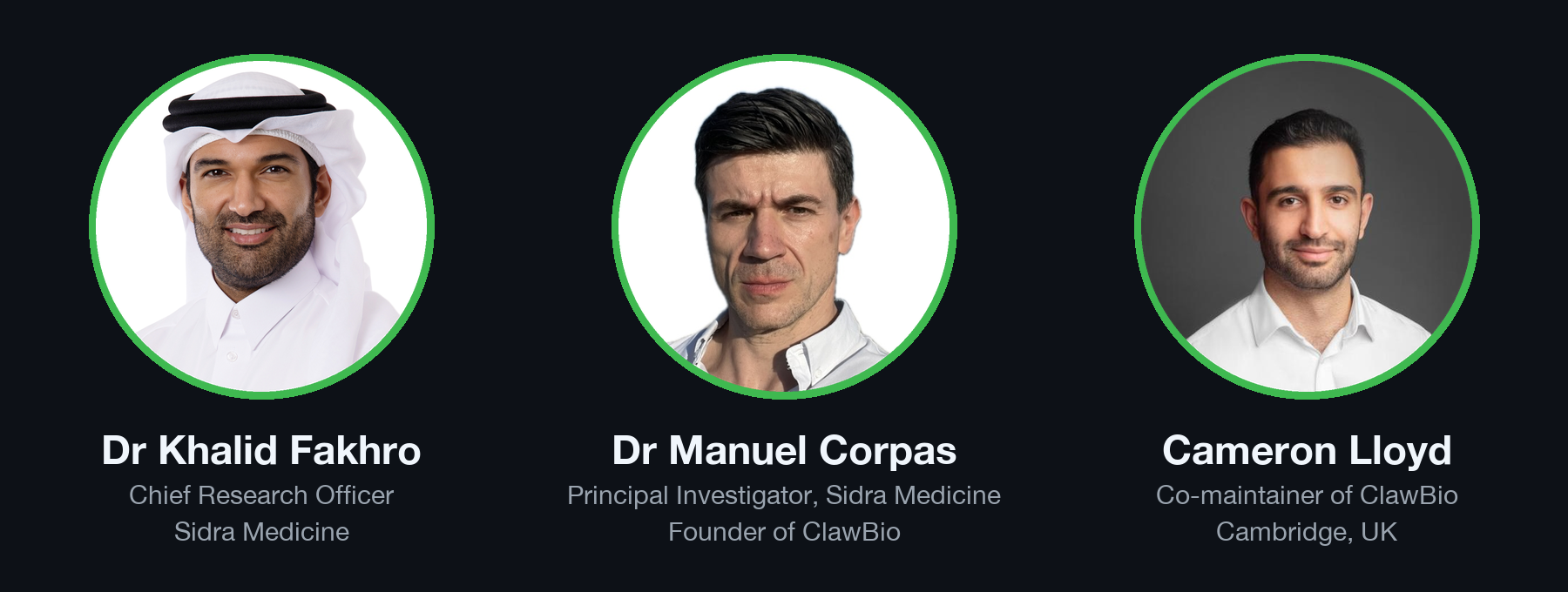
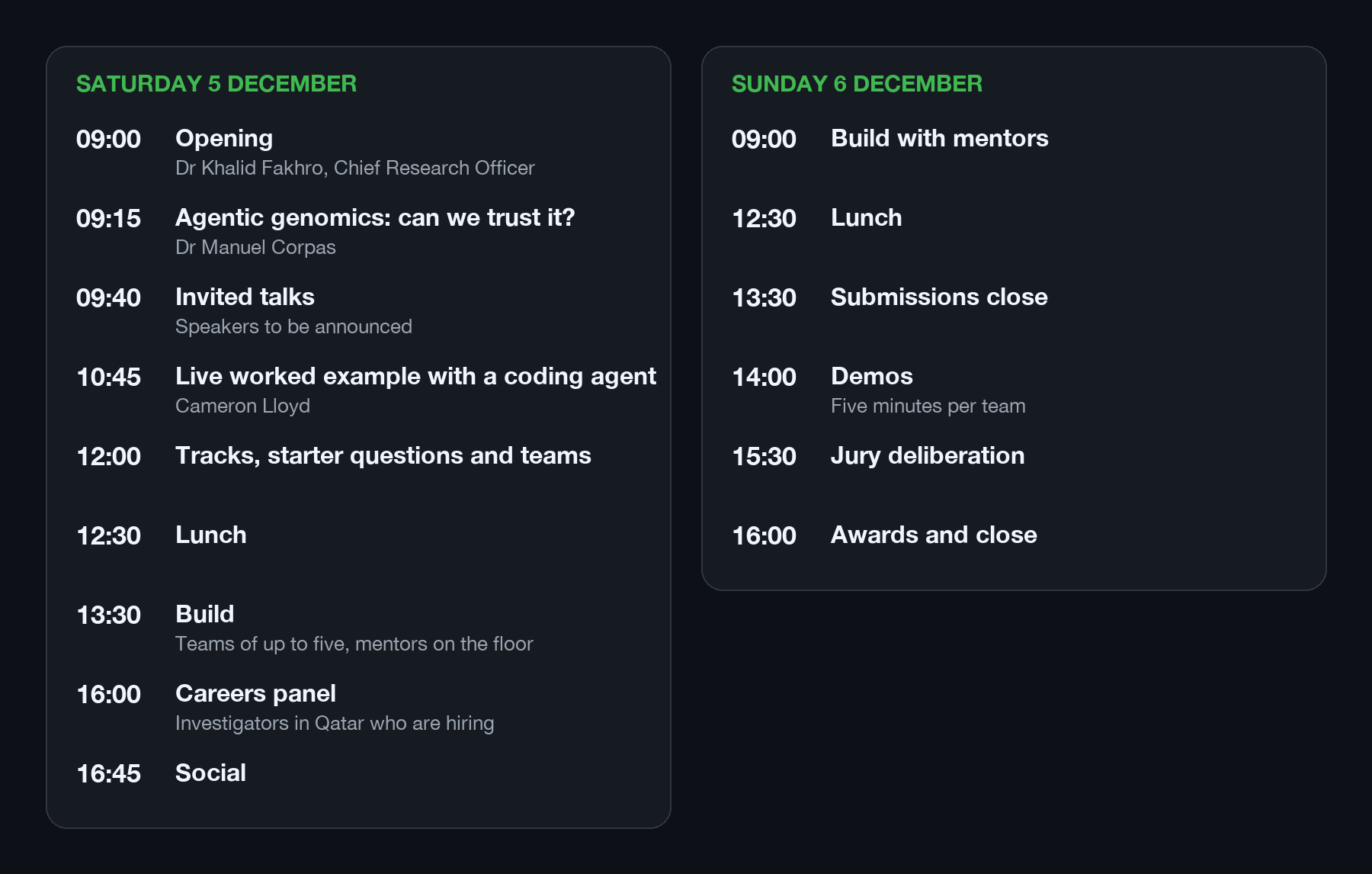
- 09:00 Opening by Dr Khalid Fakhro, Chief Research Officer of Sidra Medicine
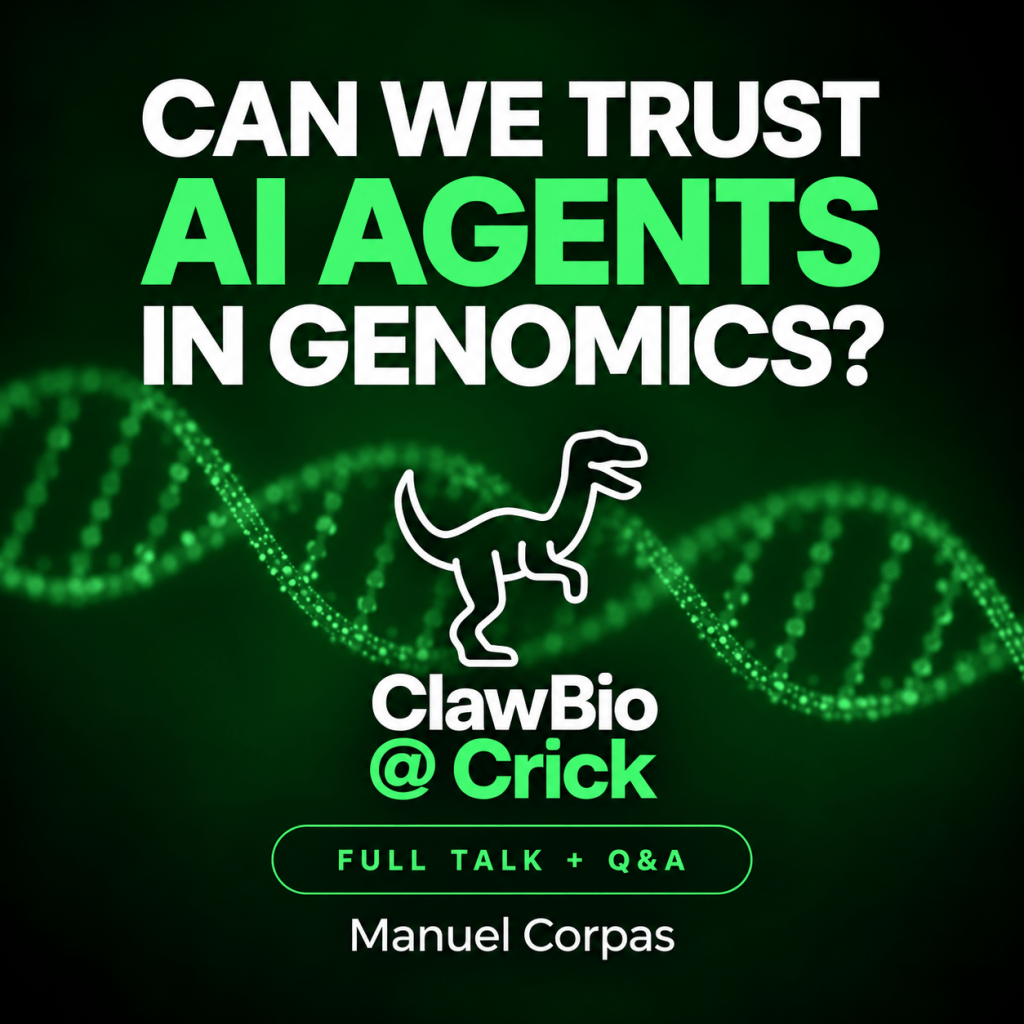
- 09:15 Agentic genomics: can we trust it?
- 09:40 Invited talks
- 10:45 A live worked example with a coding agent, from input data to a checked result, led by Cameron Lloyd, co-maintainer of ClawBio
- 12:00 The three tracks, their starter questions, and teams
- 13:30 Build, with mentors on the floor
- 16:00 Careers panel: working in computational genomics and AI in Qatar, with investigators who are hiring
- 16:45 Social
Sunday 6 December
- 09:00 Build, with mentors on hand
- 13:30 Submissions close
- 14:00 Demos, five minutes per team
- 16:00 Jury decision, awards and close
Three tracks
You do not need to arrive with an idea. Each track has prepared questions you can start on in the first hour.
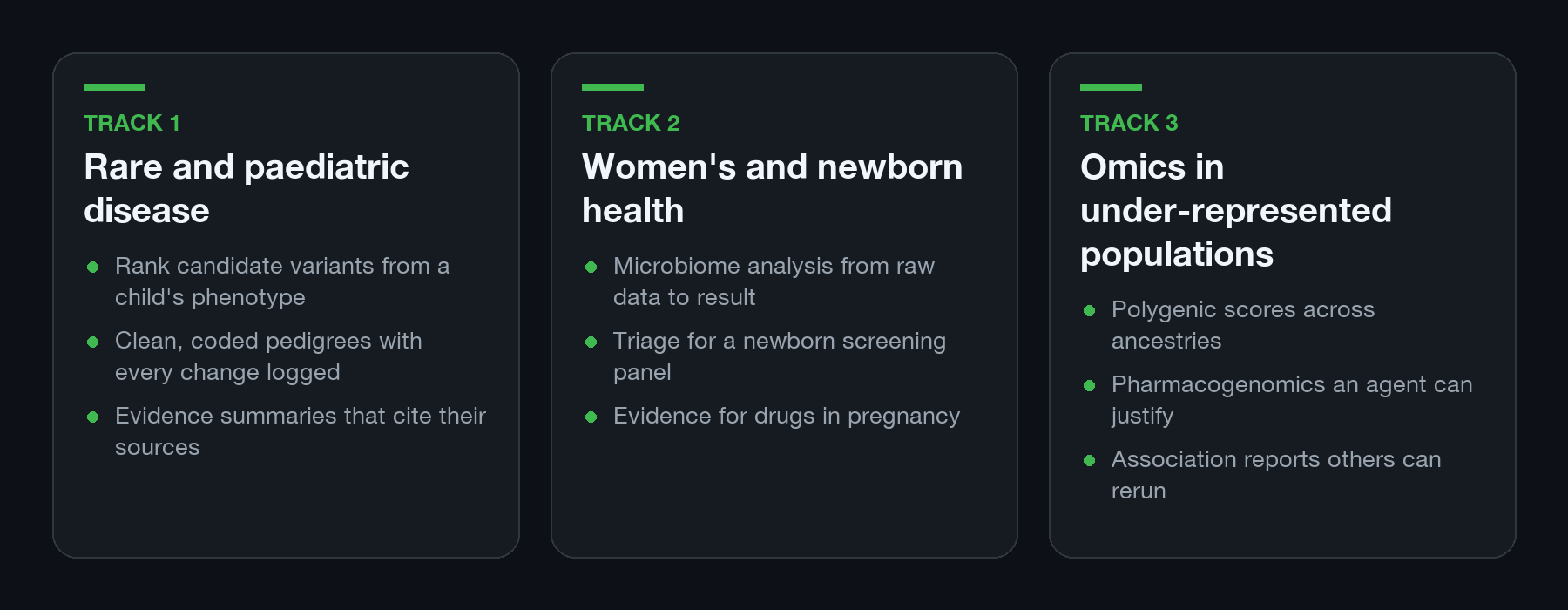
Rare and paediatric disease. Rank candidate variants from a child’s phenotype and say when the agent cannot decide. Turn messy phenotype sheets into a clean pedigree with every change logged. Write an evidence summary in which every claim points to its source.
Women’s and newborn health. Run a microbiome analysis from raw data to result. Triage a newborn screening gene panel and state what cannot be concluded. Gather and grade the evidence for a drug and gene pair in pregnancy.
Omics in under-represented populations. Measure how a polygenic score transfers across ancestries and report where it fails. Find where an agent gives a confident pharmacogenomic answer the data does not support. Produce an association report another team can rerun.
Every question comes with a short brief, example data, a ClawBio skill to start from and a clear definition of done. The data is public or synthetic; no patient data is used.
An agent that confidently invents an answer is worse than one that says it does not know.
The jury and the careers panel
On Sunday afternoon every team presents to a jury from science, industry and venture capital. They ask two things: can the agent’s work be inspected and trusted, and could it become something real? Ajiri Omafokpe, co-founder of Builders Tribe, is the first confirmed member.
On Saturday at 16:00, investigators who hire and train computational scientists in Qatar sit down with the participants to talk about skills, careers and open positions.
Who should come
Bioinformaticians, computational biologists, genomics researchers, clinicians, students, postdocs, software engineers and machine learning people, from Qatar, the region and further afield. You do not need to have used ClawBio or an AI coding agent before. You do need to be comfortable reading and running code. Teams are up to five people.
It is free, lunch and coffee are provided, and places are limited. 41 people had registered by 14 November.
Register here: luma.com/clawbio-mzh0
My thanks to Dr Khalid Fakhro, Dr Ammira Al-Shabeeb Akil and Sidra Medicine for making it possible.


















Leave a Reply